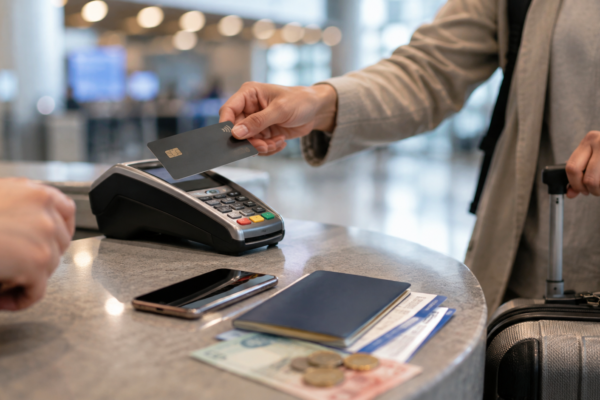

Most of us take digital banking for granted. We tap a few buttons, see the word “successful,” and move on with our day. It feels instant, seamless, and modern — like money itself has finally caught up with the pace of our lives. But beneath that smooth screen experience is a system that still runs on old rules and rigid schedules.
And that hidden gap between what we see and what actually happens is exactly what the Bangko Sentral ng Pilipinas (BSP)’s Project Agila is now trying to fix.
Here’s a typical scenario: It’s 10 PM. You send money through your banking app, and it says “successful.” Sweet, right? But here’s the catch: behind the scenes, that money might not really move until the next business day.
Kumbaga, even in our digital era, the gears that actually settle payments — the ones that banks use to confirm that money has changed hands — still take breaks after hours. For most people, it’s invisible. But for banks, institutions, and government transactions, it’s a bottleneck that can ripple through the financial system.
This is the problem the Bangko Sentral ng Pilipinas (BSP) is tackling with Project Agila, a pilot program that tests a wholesale Central Bank Digital Currency (wCBDC) to enable 24/7 settlements for interbank transfers and government bond transactions.
Understanding the “settlement gap”
Most of us assume that when money leaves our account, it’s instantly received. In reality, there’s a difference between a transfer and a settlement:
Transfer: The money appears in the recipient’s account. Apps and online banking make this look instant.
Settlement: The “official handshake” between banks happens, confirming that the funds have actually moved.
Right now, settlement processes have cutoffs. Transactions after hours, weekends, or holidays may wait until the next banking day to finalize. This delay affects liquidity and can sometimes create risks if banks need access to those funds quickly.
Kumbaga, digital banking apps have made money feel instant — but under the hood, the traditional system is still tied to old schedules.
What is Project Agila?
Project Agila is BSP’s experiment with a wholesale CBDC, meaning it’s meant for banks and financial institutions, not everyday consumers. It’s a digital form of the peso used strictly for back-end settlements — like a faster, always-on version of the systems banks already use.
The idea is simple: by tokenizing funds on a digital ledger managed by BSP, banks can settle interbank payments or government bond transactions at any time, day or night.
Important note: This is not the digital peso you’ll use to buy coffee. It is infrastructure-level money — intended to speed up financial plumbing that was built decades ago.
Why government bond settlements matter
You might wonder why the BSP is testing this on government bonds first. Here’s why:
Government bonds are essentially loans to the government. Banks buy and sell these bonds to manage their portfolios and liquidity. Settlements for these bonds can involve large sums, and delays can ripple across the financial system.
Faster settlement means:
- Banks can move money more efficiently
- Counterparty risks are reduced
- Liquidity management improves
Kumbaga, if banks can settle large transactions at any time, it can keep the system smoother for everyone — even if we never see it directly as consumers.
The promise: 24/7 settlements
The pilot is designed to show Filipinos that interbank and government transactions can be settled instantly — even outside traditional banking hours.
Potential benefits include:
- No more waiting for the “next banking day”
- Reduced delays in liquidity management
- Faster clearing of large-value transactions
- Stronger resilience in times of financial stress
It’s a step toward a financial system that operates on a clock that never sleeps, which is closer to how digital apps already make us expect money to move.
But it’s still experimental: risks and hurdles
While the promise is exciting, BSP is proceeding cautiously. Some of the key challenges include:
- Cybersecurity risks: A digital ledger handling huge sums needs bulletproof protection
- Operational risks: Banks must integrate new systems with existing processes
- Regulatory coordination: Policies must align to prevent gaps or errors
- Scalability: A pilot doesn’t guarantee the system will handle full-scale operations
Kumbaga, this isn’t a finished product. It’s a test to see what works, what doesn’t, and how banks and BSP can collaborate to fix the bugs before any full rollout.
Why it matters to regular Filipinos
Even if we don’t use this wholesale CBDC ourselves, it matters because:
- Faster settlement can reduce systemic risks in the banking system
- Efficient government bond settlements can help fund public projects without delays
- Banks have smoother liquidity, which may eventually benefit credit availability and stability
Simply put, Project Agila is the quiet engine that could make our financial system more reliable, even if it’s invisible to most of us.
Conclusion: Cautious optimism
Project Agila is a bold experiment, but it’s still a pilot. It’s not magic money that will instantly make our economy digital. What it is is a step toward modernizing the back end of Philippine finance — making interbank and government settlements faster, safer, and available 24/7.
Kumbaga, it’s promising infrastructure work that could quietly improve the way money moves in the country, but the road from pilot to full-scale implementation is full of tests, hurdles, and lessons to learn. And that cautious, experimental approach is exactly what makes it credible.
Resources:
BSP official page: Bangko Sentral ng Pilipinas – Digital Peso
Financial news coverage: Reuters – Wholesale CBDC
Global CBDC reference: IMF – Central Bank Digital Currency