

Synthetic Identity Crisis has become a defining challenge for Philippine banks as AI-generated fraud scales faster than traditional security controls can adapt. What was once a niche risk is now a systemic issue; synthetic identity schemes have risen by nearly 300% globally, increasingly targeting digital-first financial institutions.
In the Philippines, where mobile banking, e-wallets, and digital onboarding are central to financial inclusion, Synthetic Identity Crisis exposes a critical tension: how to balance speed and convenience with trust and security. As fraudsters deploy AI to fabricate convincing digital personas, banks are being forced to rethink the very nature of identity verification.
Why synthetic identity is harder than traditional fraud

Synthetic identity fraud differs fundamentally from account takeovers or stolen credentials. Instead of hijacking a real person’s identity, fraudsters construct a “Frankenstein” identity — combining legitimate data points (such as real ID numbers) with fabricated information and AI-generated faces. This makes detection especially difficult, as there is often no clear victim to raise red flags.
Over time, these synthetic identities can establish transaction histories, pass basic compliance checks, and even build credit profiles.

For Philippine banks, this creates a “delayed detection” risk, where losses surface only after significant trust — and credit — has already been extended.
As digital onboarding accelerates across the sector, institutions are realizing that static identity crisis checks are no longer sufficient in an AI-driven threat environment.
OTP fatigue and the limits of legacy security models
For years, one-time passwords (OTPs) have been the cornerstone of digital banking security in the Philippines. However, the current crisis is revealing the limits of OTP-based systems when faced with AI-enabled scams, SIM swaps, and social engineering.
Authentication confirms access, but it does not confirm authenticity. Fraudsters can pass OTP challenges while operating behind entirely fabricated identities. This has made it clear that defense cannot rely on point-in-time verification alone.
Consequently, banks are shifting toward continuous risk assessment, where identity confidence is evaluated throughout the customer lifecycle, rather than just during account creation.
Behavioral biometrics: The new defense layer
To combat these threats, Philippine banks are increasingly deploying behavioral biometrics and liveness detection technologies. These tools analyze how users interact with their devices — keystroke dynamics, swipe behavior, and session patterns — creating identity signals that are nearly impossible to fake at scale.
Liveness detection further strengthens defenses by ensuring that onboarding processes involve a real, present human rather than deepfakes or replayed media. In the context of synthetic fraud, this combination significantly raises the “cost” for fraudsters without increasing friction for legitimate customers.
Crucially, these technologies operate passively, allowing banks to preserve the seamless digital experiences consumers now expect.
Rethinking identity in an AI-driven banking era

The synthetic identity crisis is no longer just a fraud problem; it is a strategic stress test for how Philippine banks define and defend trust. As AI lowers the cost of creating synthetic personas, the risk now cuts across retail banking, digital banks, e-wallets, and even government-linked financial programs.
In the Philippines, this challenge is amplified by the push for financial inclusion.
Faster onboarding and simplified KYC (Know Your Customer) processes are essential to reaching the unbanked, but they also expand the attack surface. This evolution exposes a hard truth: growth and security can no longer be treated as separate priorities.
Banks that continue to rely on static checks and OTP-centric defenses risk falling behind. Fraudsters are already exploiting the gaps between regulatory compliance and real-world threat models. Ultimately, the institutions that succeed will be those that treat identity as a living signal rather than a one-time checkpoint.
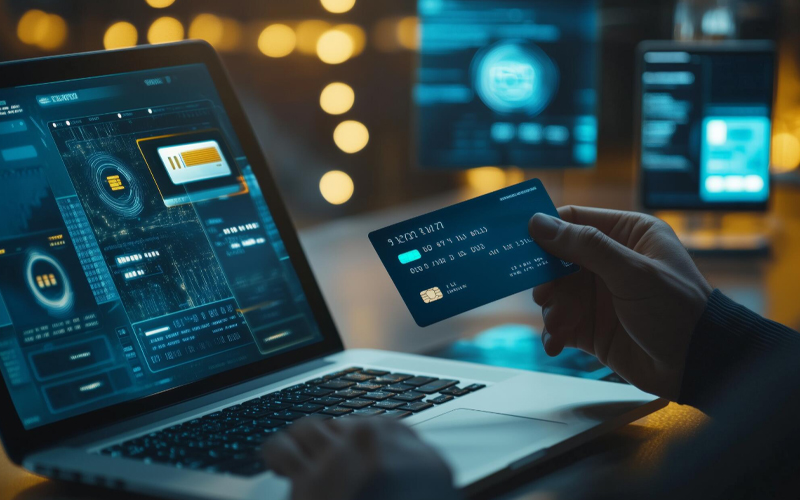
Banks that continue to rely on static identity checks and OTP-centric defenses risk falling behind. Fraudsters are already adapting to regulatory frameworks, exploiting gaps between compliance requirements and real-world threat models. As transactions increasingly move across digital channels, Synthetic Identity Crisis Testing is forcing institutions to think beyond regulatory minimums and toward continuous, intelligence-driven identity assurance.
Ultimately, the institutions that succeed will be those that treat identity as a living signal rather than a one-time checkpoint. By investing in behavioral analytics, liveness detection, and adaptive risk monitoring, Philippine banks can strengthen consumer trust while supporting the country’s digital transformation goals.
In an AI-driven banking era, Synthetic Identity Crisis Testing is not just about stopping fraud — it is about future-proofing the foundations of trust in the Philippine financial system.