

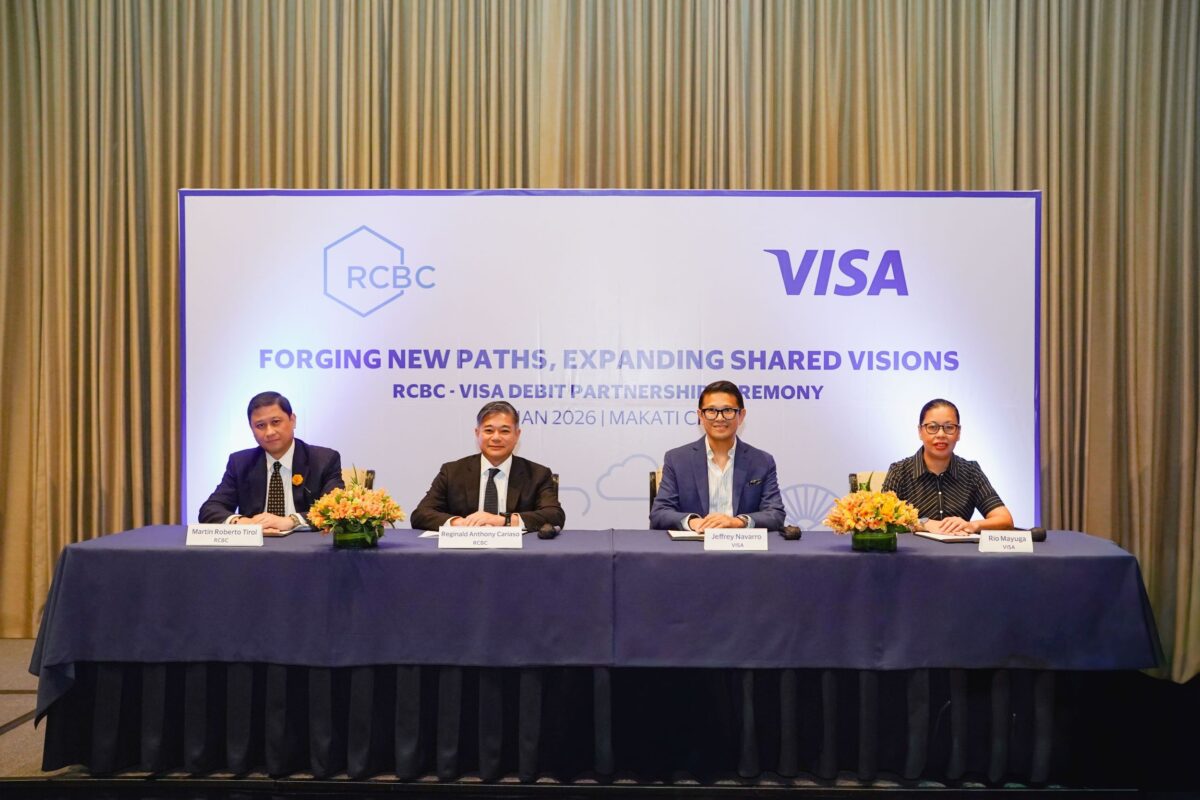
In a move set to reshape the local digital finance landscape, global payments leader Visa (NYSE: V) and Rizal Commercial Banking Corporation (RCBC) have announced a landmark debit partnership.
The collaboration allows RCBC’s massive customer base to tap into Visa’s global network of millions of merchants, signaling a significant shift in how Filipinos manage their everyday liquidity.
While credit cards often grab the headlines in fintech circles, the “debit revolution” is the real engine behind financial inclusion in emerging markets.
Across the Asia-Pacific region, debit cards now account for 48% of all card transactions, spanning both face-to-face and remote online payments.
By enabling Visa debit credentials for RCBC accounts, the duo is directly addressing the preference of Filipino consumers for “real-time” control — spending only what they have while enjoying the security of a global payment rail.
A “cash-lite” catalyst
The timing of the partnership aligns perfectly with the Bangko Sentral ng Pilipinas’ (BSP) roadmap to convert 50% of total retail transactions into digital form.

Jeffrey Navarro, Country Manager for Visa Philippines
For a country still heavily reliant on cash for “sari-sari” store purchases and daily commutes, the entry of a major universal bank into the Visa debit ecosystem acts as a critical catalyst.
“By expanding the reach of debit payments, Visa helps accelerate the digitization of payments in the country,” said Jeffrey Navarro, Country Manager for Visa Philippines.
“This collaboration aligns with the government’s vision of a cash-lite society, empowering RCBC consumers to make seamless everyday payments backed by Visa’s technology,” Navarro adds.
Solving the “trust deficit” in PH fintech
One of the primary hurdles for fintech adoption in the Philippines remains cybersecurity. With digital fraud becoming more sophisticated, the partnership leans heavily on tokenization and multi-layered security protocols.
RCBC was one of the first issuers in the country to tokenize their card credentials when Visa launched Google Wallet and Google Pay in the Philippines last year in partnership with Google, the FinTech Alliance of the Philippines, Banko Sentral ng Pilipinas, and the Department of Information and Communication Technology. This foundation ensures that when a customer taps their card or pays online, their actual card details are never exposed to the merchant.
RCBC has also previously launched Visa Direct for outbound cross-border payments, enabling Filipino consumers and business alike to make secure, real-time outbound transfers to billions of accounts across more than 190 countries and territories.
“In an era where digital threats are evolving, security is not just a feature — it is the foundation,” highlighted Reggie Cariaso, RCBC President and CEO. “With Visa’s world-class security protocols and RCBC’s robust digital infrastructure, our customers can transact with absolute peace of mind.”
The fintech ripple effect: Why this matters

The implications of this deal extend far beyond simple merchant transactions. Industry analysts suggest that this development will positively affect the Philippine fintech industry in three distinct ways:
- Lowering the barrier to e-commerce: Many Filipinos remain wary of credit debt. By providing a Visa-powered debit card, RCBC enables the “un-creidted” population to participate in global e-commerce, Netflix subscriptions, and app store purchases without the risk of high-interest revolving credit.
- Boosting real-time cross-border rails: RCBC has already integrated Visa Direct, a move that allows for real-time outbound transfers to over 190 countries. This partnership further streamlines the “outbound” fintech corridor, making it easier for local SMEs and freelancers to pay international suppliers or partners.
- Encouraging “super app” interoperability: As RCBC continues to lead in the digital banking space (recently recognized as the Best Bank for Digital), the integration with Visa’s network allows for smoother “cash-in” and “cash-out” flows between traditional bank accounts and mobile wallets, creating a more cohesive fintech ecosystem.
The path forward
As the Philippines enters a new era of digital maturity, the partnership between a global giant like Visa and a local innovator like RCBC serves as a blueprint for the industry.
It proves that the future of money movement in the country isn’t just about the “newest” app, but about making the foundational bank account more powerful, more global, and — most importantly — more secure.
By fully integrating into the network of Visa, a world leader in digital payments that facilitates transactions across more than 200 countries and territories, RCBC cements its position as a multi-awarded leader in digital banking innovation.
This collaboration empowers the customers of the 65-year-old institution —currently the fifth-largest privately owned bank in the Philippines and a member of the Yuchengco Group of Companies (YGC) — to thrive within a secure, world-class payments infrastructure, ensuring that the future of Philippine finance remains inclusive, innovative, and foundational to the lives of every Filipino.