

Bank lending in the Philippines continued to expand in the latter part of 2025, underscoring steady access to credit for businesses and households even as growth showed early signs of moderation, according to the Bangko Sentral ng Pilipinas (BSP).
Outstanding loans from universal and commercial banks (U/KBs) [1] grew by 10.3 percent year-on-year in both October and November, easing slightly from earlier months but still reflecting resilient credit demand across key sectors of the economy.
On a month-on-month basis, lending rose by 0.6 percent in October and accelerated to 0.9 percent in November after adjusting for seasonal factors. Credit growth remained largely driven by lending to residents, which expanded at a steady pace of around 11 percent in October [2] before easing slightly in November.
In contrast, loans to non-residents [3] continued to decline, with double-digit contractions reflecting weaker offshore borrowing activity, including loans from banks’ foreign currency deposit units.
Business, consumer loans power broad-based credit growth

Business loans continued to account for the bulk of credit expansion, growing by about 9 percent year-on-year in both months.
Strong lending activity was recorded in real estate, utilities, wholesale and retail trade, transportation and storage, and information and communication services — sectors closely tied to domestic consumption, infrastructure, and digitalization.
Notably, lending to electricity, gas, steam, and air-conditioning supply posted robust double-digit growth, pointing to sustained investment in energy-related projects. Consumer lending also remained a bright spot.
Loans to households — including credit card, motor vehicle, and salary loans — expanded by more than 22 percent year-on-year, highlighting continued appetite for consumer credit amid stable labor market conditions and rising digital access to financial services.
Liquidity rises as lending fuels economic activity
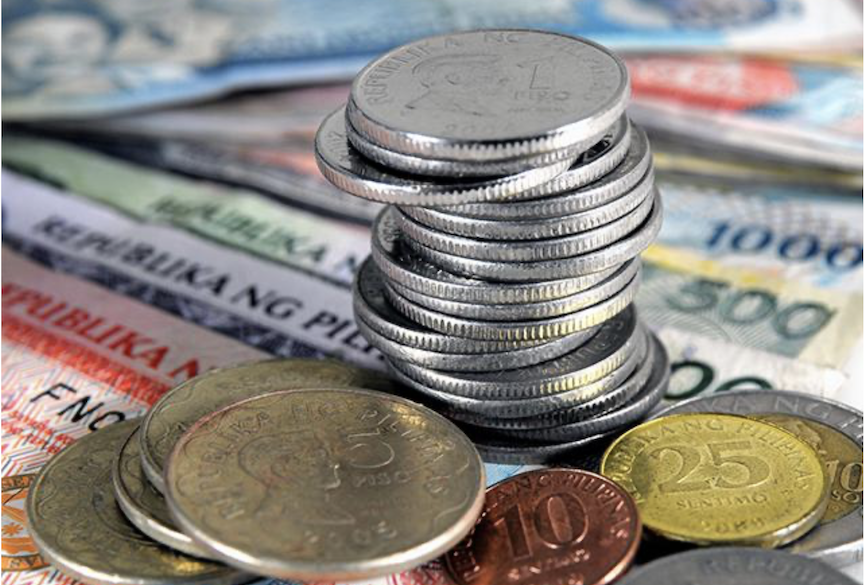
Alongside the expansion in bank lending, domestic liquidity, or M3, also grew, reaching ₱19.4 trillion in November, up 7.6 percent from a year earlier.
While this was slower than October’s pace, money supply still rose by 1.2 percent month-on-month on a seasonally adjusted basis.
The BSP said liquidity growth was mainly supported by higher claims on the domestic sector, reflecting continued bank lending to private businesses and households, as well as increased government borrowing.
Net foreign assets likewise improved, driven by stronger foreign positions of both the banking system and the central bank.
Bank lending and domestic liquidity move closely together, as credit expansion increases the amount of money circulating in the economy — funding spending, investment, and business expansion.
This linkage makes bank loans a key transmission channel for monetary policy, influencing both economic activity and inflation dynamics.
Looking ahead, the BSP said it will continue to closely monitor bank lending and liquidity conditions to ensure they remain supportive of sustainable economic growth, while staying aligned with its price stability and financial stability objectives.
—
[1] Loans cited in this press release excludes reverse repurchase agreements of U/KBs with the BSP.
[2] Resident shall refer to: a) an individual citizen of the Philippines residing therein; or b) an individual who is not a citizen of the Philippines but is permanently residing therein; or c) a corporation or other juridical person organized under the laws of the Philippines; or d) a branch, subsidiary, affiliate, extension office or any other unit of corporations or juridical persons which are organized under the laws of any country and operating in the Philippines, except Offshore Banking Units (OBUs), as defined in Section 1 of Part Two, Chapter I of the Manual of Regulations on Foreign Exchange Transactions.
[3] Outstanding loans to non-residents include loans by UKB’s foreign currency deposit units (FCDUs) to non-residents.