

As Filipinos ease back into work routines, school schedules, and everyday errands after the holidays, the small friction points of daily life are becoming harder to ignore — long checkout lines, fumbling for wallets, and repeatedly typing card details for online purchases.
EastWest Banking Corporation is aiming to remove some of that friction. The bank has enabled Google Pay™ for its credit cardholders, allowing customers to make fast, contactless payments using compatible Android and Wear OS devices, both in physical stores and online.
With the rollout, EastWest becomes one of the first local banks to support Google Pay in the Philippines. Cardholders can now add their EastWest Visa or Mastercard credit cards to Google Wallet, enabling them to pay with a simple tap of their phone — without needing to carry a physical card.
Everyday payments made simpler
The move comes as consumers increasingly seek faster and more convenient payment options while navigating packed schedules and rising digital adoption.
For in-store purchases, Google Pay allows users to unlock their phone and tap it on a contactless terminal, completing transactions in seconds.
This is particularly useful for routine errands such as grocery shopping, dining out, or quick retail purchases, where speed at checkout can make a noticeable difference.
Online and in-app payments are also streamlined. Instead of entering full card numbers and security codes, users can select Google Pay at checkout and confirm the transaction on their device, reducing both time spent and the risk of errors.
Google Pay can also be used for tap-to-pay public transport, including the MRT-3, giving commuters a quicker and more secure way to pay fares without pulling out wallets in crowded stations.
Security built into every tap
Beyond convenience, EastWest highlighted security as a core feature of Google Pay. Transactions are protected through tokenization, which replaces the actual card number with a unique digital token, ensuring that sensitive card details are not shared with merchants during payment.
The service is supported by a growing network of contactless-enabled terminals across supermarkets, cafés, retail outlets, and transport systems nationwide. As more apps and e-commerce platforms adopt Google Pay, users can expect a more consistent payment experience across physical and digital channels.
Part of a broader digital shift at EastWest
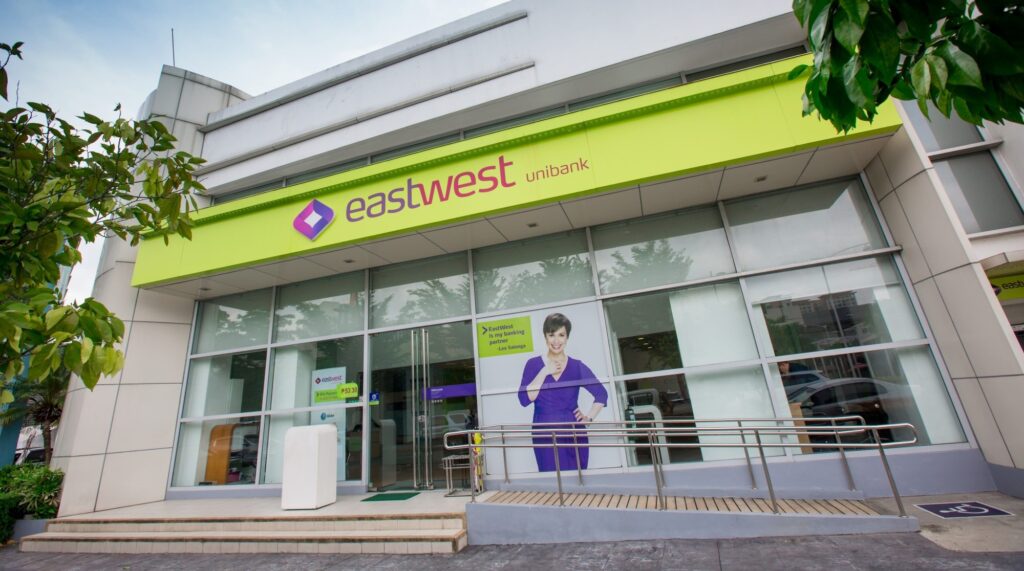
The Google Pay launch reflects EastWest’s broader push toward mobile-first and technology-enabled banking, as the bank continues to modernize how customers interact with its products and services.
Founded in 1994, EastWest has evolved from a challenger bank into one of the country’s fastest-growing universal banks, building scale in consumer lending, credit cards, auto loans, and mass-affluent banking. It now serves more than 3 million customers nationwide through a network of over 400 branches, supported by an expanding digital ecosystem.
In recent years, EastWest has taken a more deliberate approach to digital transformation, focusing on modernizing core infrastructure rather than rolling out fragmented upgrades. This includes adopting cloud-based, software-as-a-service (SaaS) platforms to support scalability, faster product development, and improved resilience — a strategy that complements consumer-facing initiatives such as contactless and mobile payments.
For retail customers, these investments translate into smoother digital journeys and more personalized services. For SMEs and corporate clients, they enable faster onboarding, more efficient transactions, and improved access to financing — areas where speed and reliability are increasingly critical.
Making everyday life feel easier
For now, EastWest’s integration with Google Pay highlights how incremental upgrades in payment technology can have an outsized impact on everyday routines.
Fewer steps at checkout, less reliance on physical cards, and faster transactions add up to a banking experience that fits more naturally into daily life.
As digital payments continue to gain traction in the Philippines, EastWest’s move positions it to meet evolving consumer expectations — where convenience, security, and mobility are no longer optional, but essential.