
Despite the Philippines’ rapid shift toward digital finance, a large segment of the country’s most financially vulnerable population remains disconnected from formal lending channels — a gap that leading fintech executives say demands urgent, coordinated action.
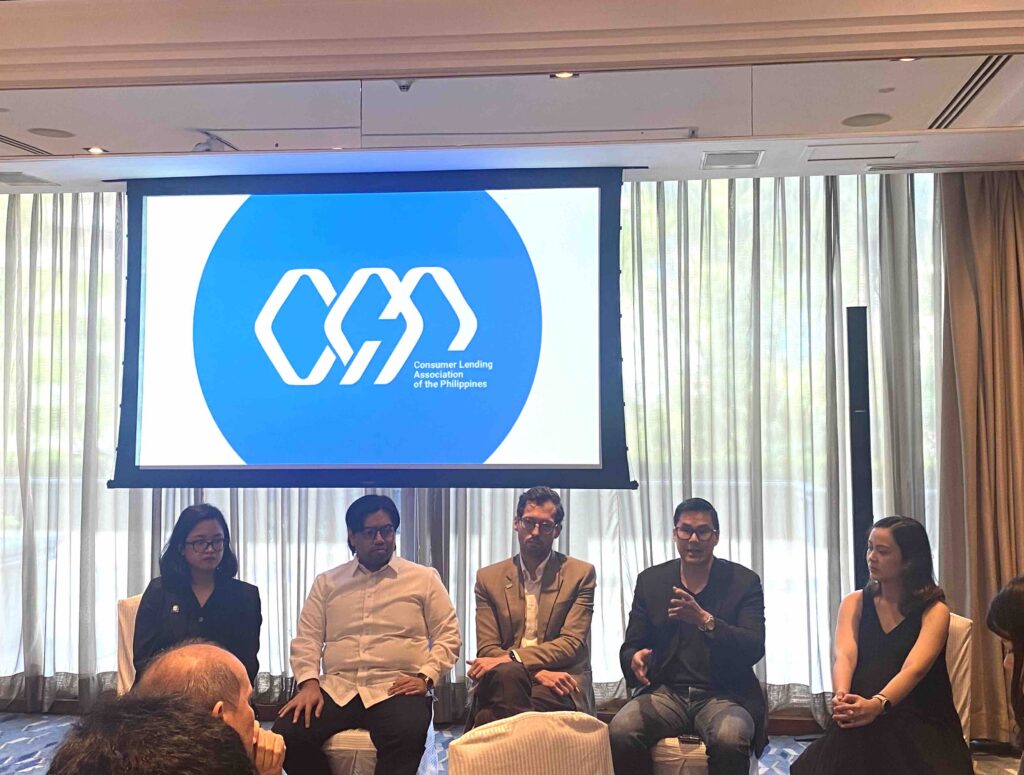
In an exclusive conversation with FintechNewsPH during a media engagement hosted by the Consumer Lending Association of the Philippines (CLAP), executives from TALA, JuanHand, SAVii, and other digital lenders noted that the industry’s greatest challenge is no longer technology adoption — but reaching the Filipinos who need financial services the most.
Tala: Digital literacy gaps slow down financial inclusion
For SAVii’s Abraham Guiyab, the problem begins with technology access and digital literacy. Many potential borrowers still lack smartphones, reliable connectivity, or even the confidence to complete app-based processes such as ID verification.
“We have to make the apps as user-friendly as possible,” Guiyab emphasized. “Help must be available anytime.”
Industry players say complexity often discourages low-income earners from trying digital lending tools altogether — a barrier that fintechs are now actively redesigning around.
TALA Philippines General Manager Moritz Gastl highlighted the massive underserved workforce earning ₱10,000 to ₱40,000 monthly — a demographic that represents 70–75 million Filipinos and often turns to informal or unregulated lenders out of convenience.
CLAP President Atty. Arianne Ferrer echoed this point, telling FintechNewsPH: “That 75 million is the Filipino majority. That’s who we’re trying to give access to.”
Rural Visayas and Mindanao remain the most unreached
While digital lending has gained significant traction in urban centers, rural areas remain largely untouched.
JuanHand CEO Francisco “Coco” Mauricio revealed that over 60% of JuanHand’s users are still concentrated in Metro Manila, with Cebu and Davao emerging as regional growth pockets. But much of Visayas and Mindanao remains unserved or unaware of digital lending options.
Mauricio argued that tech literacy is no longer the issue. “If you can use Facebook, TikTok, or Instagram, you’re tech literate,” he said. The real barrier, he added, is the mindset— many consumers hesitate to use the same digital familiarity for financial services.
Fintech firms push toward accessibility and mindset change
To close the gap, fintech companies are doubling down on simplified app designs, faster verification processes, and education campaigns tailored for first-time digital borrowers. Localized, community-centric strategies are also being explored to better reach rural households that remain cautious of online financial services.
Industry leaders agree that the next frontier is not just technological accessibility — but psychological readiness.
“The opportunity is in the rural areas and in removing the fear of using technology for financial services,” Mauricio noted. “That’s where the real work is.”
CLAP’s plan focuses on improving access for underserved borrowers

In an interview with FintechNewsPH, CLAP President and TALA External Affairs Director Atty. Arianne Ferrer outlined the association’s ongoing efforts to widen access to digital lending for underserved borrowers.
Ferrer said fintechs are preparing to scale targeted digital campaigns, strengthen identity verification systems, and eventually pursue offline-to-online initiatives — once regulators provide clearer guidance.
She revealed that lenders previously attempted on-ground provincial outreach but had to halt these programs because “booths are not allowed by the SEC.” With physical engagement restricted, companies now rely heavily on point-of-sale partnerships and online channels to reach users who often have limited documentation or lack valid IDs.
“We just need to keep giving those chances,” Ferrer said. She added that depending on regulatory developments next year, lenders may adopt new forms of community engagement.
“Everybody has their own approach, but the goal is the same — greater access for the underserved.”