
The Department of Education (DepEd) is tapping the power of everyday consumer spending to help close the country’s chronic classroom gap.
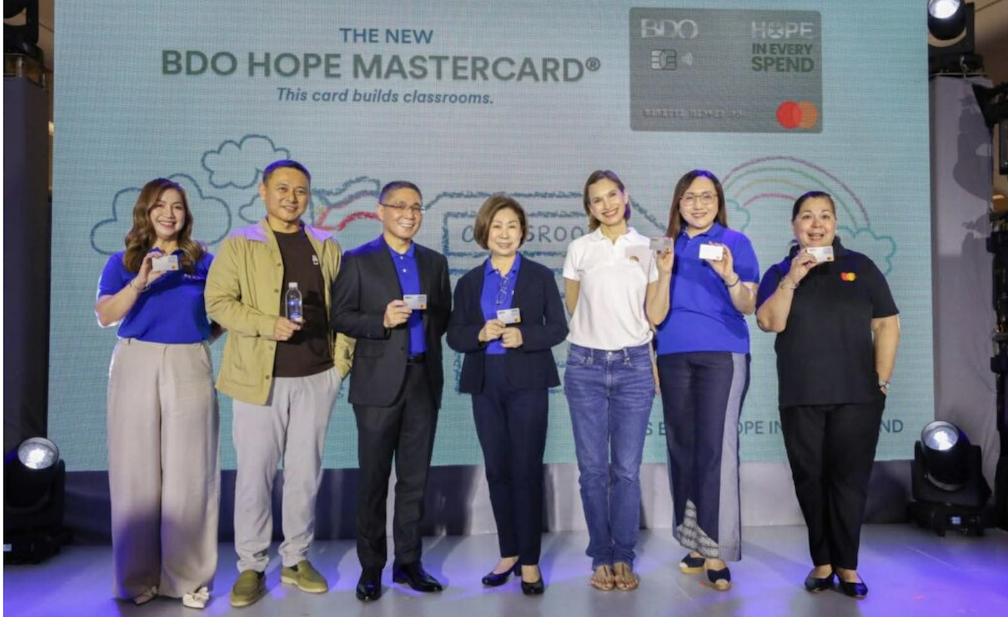
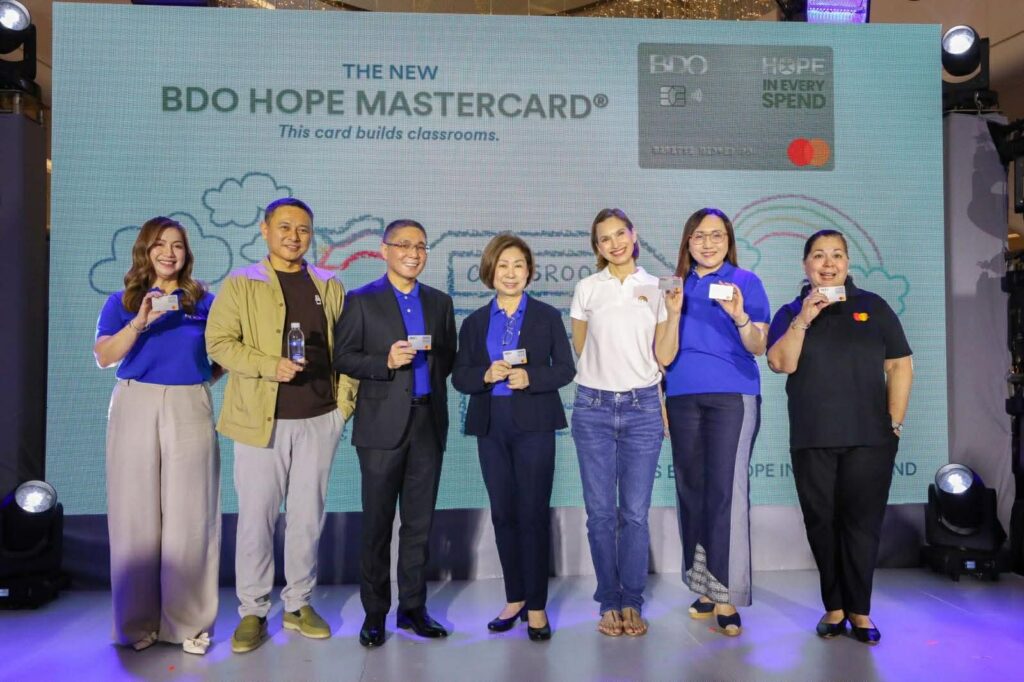
Earlier this week, DepEd welcomed the launch of the BDO-HOPE Mastercard, a new credit card that channels a portion of every swipe directly into building public-school classrooms across the Philippines.
BDO Unibank Inc., Friends of Hope Inc. (HOPE), and DepEd jointly developed the card to create a steady funding stream for education infrastructure — without requiring extra taxes or additional government spending. The program allows ordinary Filipinos to support school construction simply by using the card for their daily transactions.
Consumers drive funding through micro-donations

The BDO-HOPE Mastercard turns each purchase into a micro-donation. For every Php1,000 of qualified spending, BDO contributes Php5 to HOPE’s classroom fund. Cardholders also add to the fund through their annual fees, with Php200 from principal cards and Php100 from supplementary cards allocated for classroom construction.
DepEd selects the recipient schools and ensures that all new classrooms meet national standards. HOPE, which has already built over a hundred classrooms in under-resourced and disaster-affected communities, will manage the construction process.
Education Secretary Sonny Angara emphasized that the country needs new approaches to address long-standing infrastructure problems. “This program gives us a clear and immediate way to reduce the classroom gap,” Angara said. “If we depend solely on public funds, it may take decades to solve. By joining forces with the private sector and consumers, we can move faster and ensure every child learns in a safe and dignified environment.”
Partnership operates with zero cost to government
BDO designed the initiative to operate at zero cost to government. The bank covers all expenses related to developing, producing, and marketing the card, as well as handling the processing and distribution of donations. This structure ensures that every peso raised goes directly to building classrooms.
“Every child deserves a safe and inspiring space to grow and achieve their aspirations,” said Ma. Nannette R. Regala, Senior Vice President and Consumer Banking Group Marketing Head at BDO. “By integrating social impact into a financial product people use every day, we make it easy and meaningful for Filipinos to participate in nation-building.”
HOPE will use the donations to fund DepEd-validated projects, allowing the organization to scale its work more rapidly. The group expects the program to generate consistent funding that does not depend on annual budget cycles or political changes.
A new direction for public–private collaboration
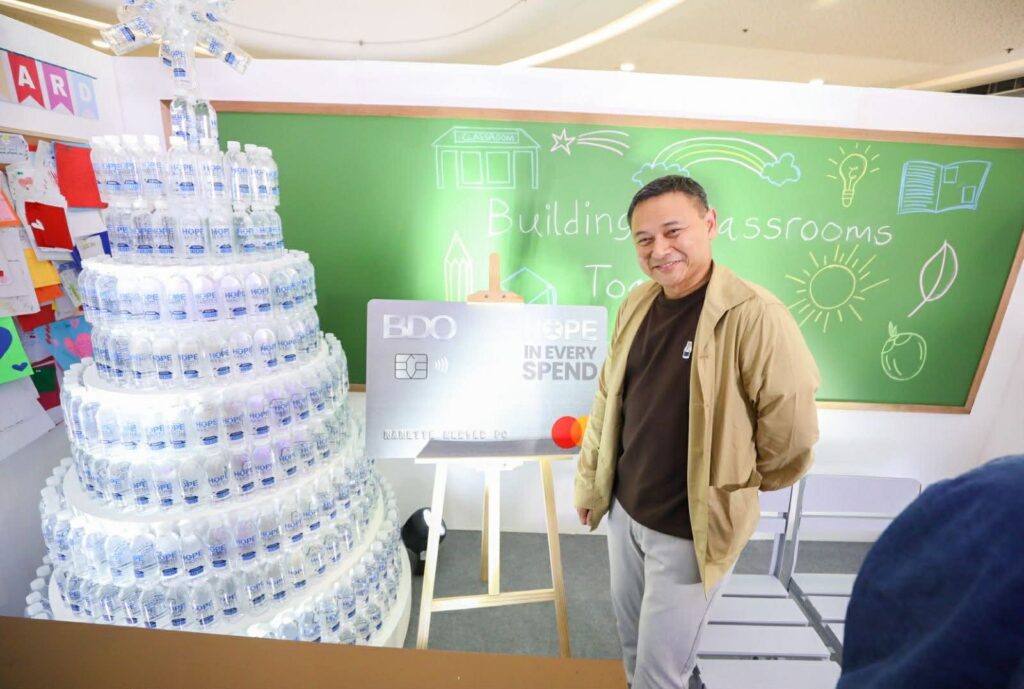
The BDO-HOPE Mastercard reflects a growing shift in the way companies support social development. The initiative treats consumers as active contributors, transforming their routine spending into a long-term investment in education.
Education advocates point out that classroom shortages remain one of the biggest obstacles to improving student performance. Enrollment continues to increase each year, and typhoons and earthquakes repeatedly damage school facilities, leaving many communities waiting long periods for repairs or reconstruction.
DepEd officials argue that these conditions make innovative partnerships essential. “We need solutions that move as fast as our students’ needs,” a DepEd infrastructure officer said. “This program gives communities a direct path to safer, more functional classrooms without waiting for traditional funding.”
The initiative also supports DepEd’s broader learning recovery strategy, which highlights the need for adequate facilities as a foundation for improving literacy and other learning outcomes.
Everyday spending as an act of nation-building
With the BDO-HOPE Mastercard now available nationwide, DepEd hopes more Filipinos will embrace the idea of “everyday giving.” Instead of relying solely on government resources, the program encourages citizens to play an active role in improving the country’s education system.
By turning ordinary transactions into tangible contributions, the partnership offers a blueprint for future public–private collaborations — one where consumers, companies, and government work together to build a better learning environment for future generations.