

The Bangko Sentral ng Pilipinas (BSP) reported a broadly stable macro-financial environment in October and November, with liquidity growth accelerating, bank lending expanding at a steady pace, and inflation continuing to ease.
However, the central bank also noted that domestic growth prospects have softened due to waning business confidence and persistent external headwinds.
Inflation remains subdued, outlook benign

Headline inflation for November 2025 came in within the BSP’s forecast range of 1.1 to 1.9 percent, keeping the year’s average below the low end of the 2–4 percent target. The continued decline in rice prices — one of the largest contributors to past inflation spikes — has helped pull down the overall inflation path.
The BSP expects inflation to remain well within the 3.0% ± 1.0 ppt target range through 2026 and 2027, with expectations “well-anchored.” While potential electricity rate adjustments and possible tariff increases on rice imports could add upward pressure, the central bank said supply-side risks remain limited.
Still, policymakers flagged a softer outlook for domestic growth, citing weaker business sentiment stemming from governance concerns around public infrastructure spending and lingering global uncertainties.
“The Monetary Board will continue to monitor incoming data and reassess the impact of previous policy actions in light of evolving conditions,” the BSP said in a media advisory.
Bank lending sustains growth at 10.3%
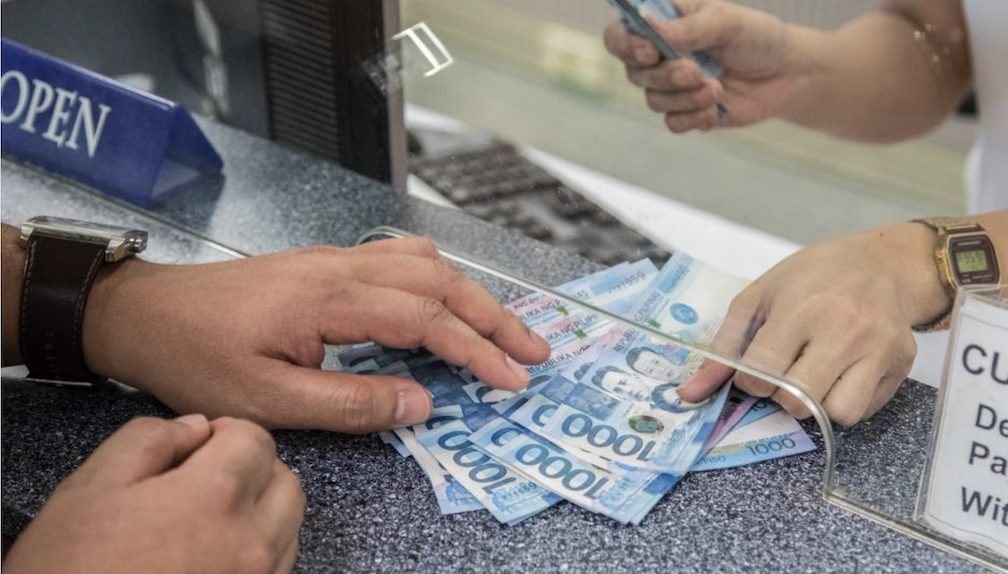
Bank lending continued to grow in October, albeit at a slightly slower pace. Outstanding loans from universal and commercial banks (U/KBs) expanded 10.3% year-on-year, down marginally from 10.5 percent in September.
Seasonally adjusted, lending rose 0.6% month-on-month, signaling that credit conditions remain supportive despite softer macro sentiment.
Lending to residents grew 10.9%, while loans to non-residents contracted sharply by 11.1 percent amid continued weakness in offshore credit demand.
Across key productive sectors, credit expansion remained steady:
- Electricity, gas, steam, and airconditioning supply: +24.8%
- Transportation and storage: +13.0%
- Wholesale and retail trade: +11.7%
- Real estate: +9.9%
- Financial and insurance: +8.5%
- Information and communication: +8.2%
Consumer loans to residents rose 23.1%, slightly lower than the prior month’s 23.5 percent, but still reflecting strong household demand driven by credit cards, auto loans, and salary-backed financing.
The BSP emphasized that lending trends are a critical transmission channel for monetary policy. “The BSP will ensure that liquidity and credit conditions remain consistent with its price and financial stability mandates,” the central bank said.
Liquidity growth accelerates to 8.3%

Domestic liquidity (M3) grew 8.3% year-on-year to approximately ₱19.1 trillion in October, faster than September’s revised 7.6 percent. Month-on-month, seasonally adjusted M3 rose 1.0%.
Claims on the domestic sector — representing private and government borrowing — expanded 10.5%, in line with steady loan growth. Claims on the private sector alone grew 11.0%, reflecting strong credit uptake from non-financial corporations and households.
Government borrowing continued to buoy liquidity, with net claims on the central government up 10.0%.
Meanwhile, net foreign assets (NFAs) increased 2.1% year-on-year. BSP’s own NFAs dipped 0.4 percent, while banks’ NFAs grew as foreign-currency denominated liabilities declined.
The central bank reiterated its commitment to ensuring that liquidity remains “consistent with price and financial stability objectives.”
Outlook: Stable for now, but risks loom
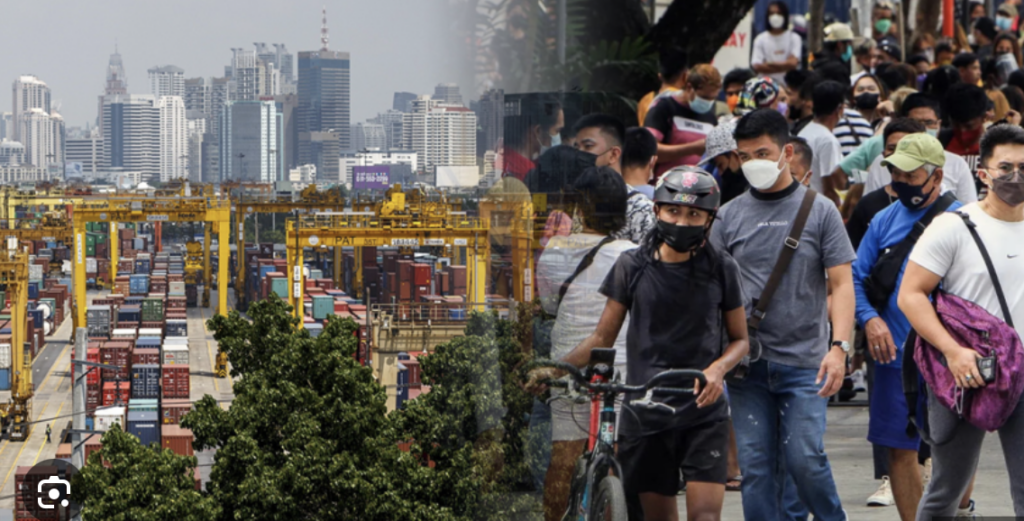
Taken together, the latest numbers paint a picture of an economy with ample liquidity, healthy credit activity, and easing inflation pressures — conditions that give the BSP some flexibility should growth continue to weaken.
But the balance of risks is shifting.
While inflation risks are currently modest, uncertainties linked to electricity prices, potential rice tariff adjustments, and external market volatility remain on the radar. At the same time, the decline in business confidence underscores the need for steady policy management and fiscal clarity.
For now, the BSP appears positioned to maintain its data-dependent approach — watchful of both inflation’s downward glide and early signs of cooling growth.