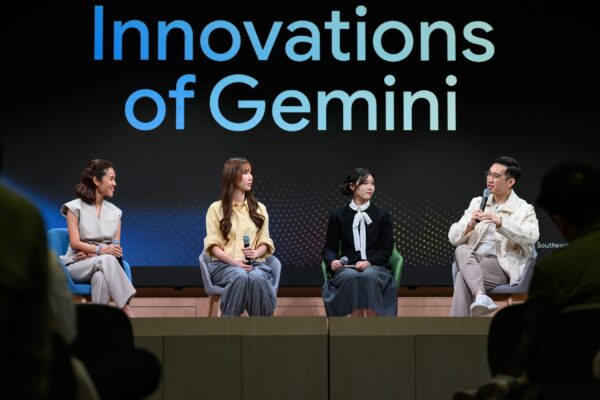

Google says the Philippines remains one of Southeast Asia’s fastest-expanding digital economies, but executives warn that sustaining this momentum will require stronger trust mechanisms, deeper regional interoperability, and accelerated AI upskilling.
During the Google e-Conomy SEA 2025 briefing in Taguig, industry leaders noted that while the country is on track for another year of strong digital gains, emerging vulnerabilities — if left unaddressed — could slow long-term progress.
Google: Digital growth accelerates, but risks are becoming more complex

Panelists noted that rapid increases in consumer adoption, AI-driven efficiencies, and the expansion of digital services continue to power the Philippines’ digital economy. But the same acceleration is also creating new structural risks.
“The consumer journey is changing so fast that enterprises have to adapt really fast — but the ecosystem is the layer that’s crucial to put it all together,” said Nikki Del Gallego, Data and Insights Lead at Google. Any disruption in this “flywheel,” she added, could dampen innovation and curb growth.
Executives also highlighted rising cyber threats and the slow maturation of local capital markets. These challenges, they said, reinforce the need for stronger digital trust, clearer regulatory safeguards, and wider readiness for AI adoption.
Trust, interoperability, and AI upskilling as key digital enablers
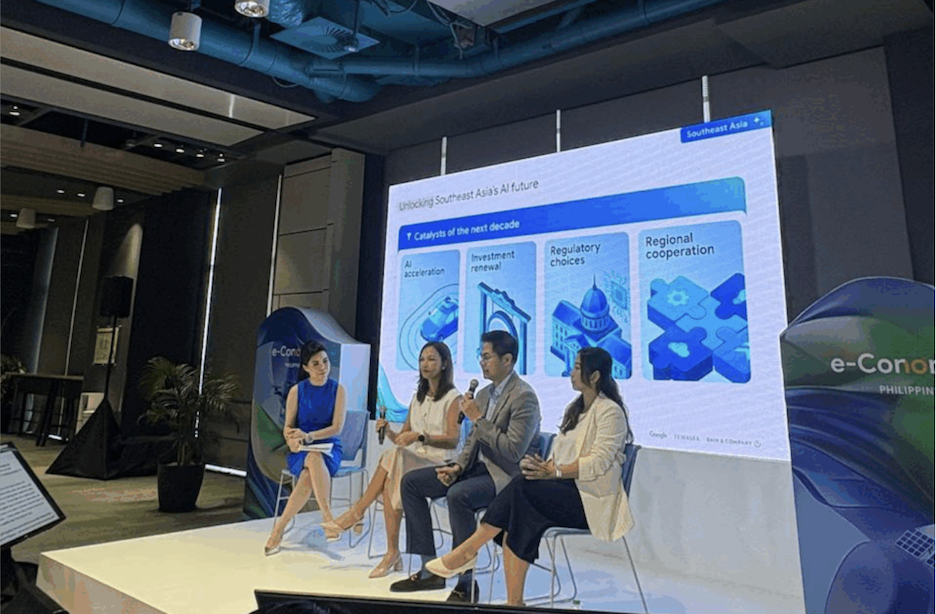
Across the panel, “trust” was repeatedly cited as the cornerstone of a resilient digital economy.
“Trust is the underlying principle,” Del Gallego said, underscoring the importance of transparent data practices and giving users better insight and control over how their information is collected and used. Businesses, she emphasized, must adopt more user-centric governance standards to strengthen digital confidence.
Regional integration also featured prominently in the discussion. Del Gallego pointed to ongoing efforts to harmonize cross-border payments in Southeast Asia.
“It’s good to see eight markets in Southeast Asia working together on a cross-border QR system. We need to do more things like that,” she said. Greater interoperability, she added, is expected to make transactions smoother and expand regional economic opportunities.
In parallel, the need for AI-centric talent development has become urgent. As companies accelerate AI adoption, the Philippines must build a talent pool capable of supporting industry-wide transformation. Google noted that it has already trained 75 million individuals in digital skills across Southeast Asia, with plans to upskill another 5.5 million people specifically in AI.
Digital adoption spreads beyond Metro Manila

During the open forum, Google executives addressed questions about digital inclusion outside key urban hubs. They reported that digital activity in rural areas is rising faster than expected, fueled by mobile-first behavior.
Internal data shows that 88% of rural Filipino users are active on major Google platforms — supported by widespread smartphone usage and alternative access points such as “piso Wi-Fi.”
With 70% of users relying primarily on mobile devices for search, video, payments, and online services, mobile-led consumption continues to shape product development across Ads, YouTube, and Google’s payments ecosystem.
While the company did not share projections for Google Pay adoption, executives said usage signals remain strong across both urban and rural markets.
Google also reiterated that there are currently no plans to introduce Pixel devices in the Philippines and that details on potential local data center developments remain confidential.
Strengthening the foundations for long-term digital progress
Industry leaders agree that while the Philippines is enjoying strong digital momentum, sustaining this trajectory will require targeted investments in trust, interoperability, cybersecurity, and AI talent development.
Strengthening digital infrastructure, improving cross-border connectivity, and building a culture of innovation are expected to be critical pillars for the country’s next decade of digital evolution.
As Del Gallego concluded, “On top of trust, it’s the culture of innovation and cooperation that will drive that flywheel forward.”